The most sky per euro
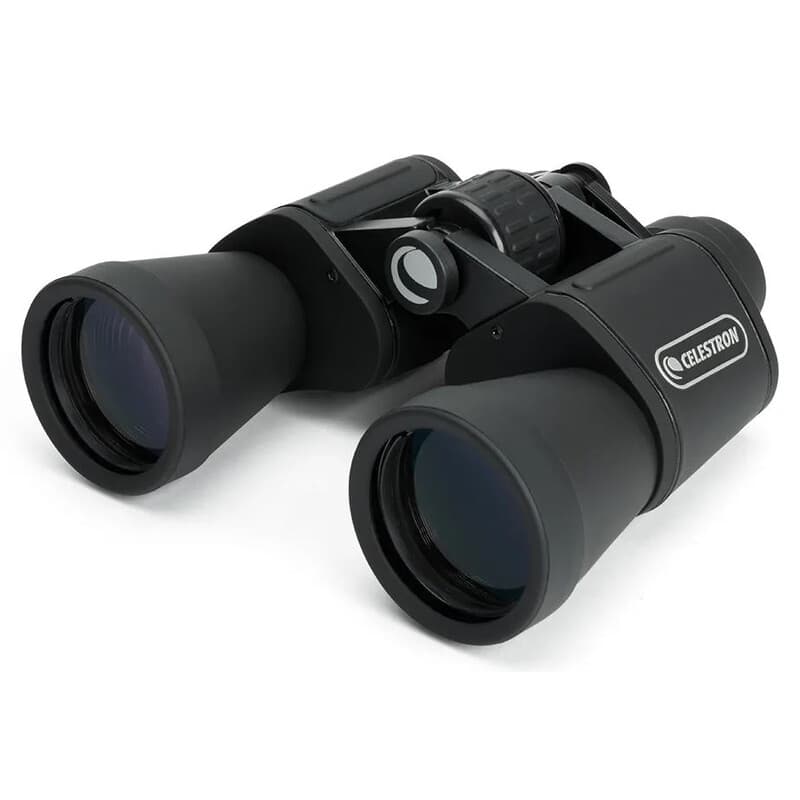
10×50 binoculars
The whole Moon, the Pleiades, Andromeda as an elongated glow — and you keep them after the telescope. Saturn stays a point.
€50seen 7 Oct 2026 at Astroshop
See it at Astroshoppaid link?
This is the budget where most of the kits whose eyepieces reach far past the usual magnification rule are sold. Under €200 there are two good buys, one honest one, and the rest.
The class first, then the cheapest observed model in it. Every view is computed: same eyepiece rule, same suburban sky.
The most sky per euro
The whole Moon, the Pleiades, Andromeda as an elongated glow — and you keep them after the telescope. Saturn stays a point.
€50seen 7 Oct 2026 at Astroshop
See it at Astroshoppaid link?
The cheapest that sufficesThe lowest observed price among these picks that will show the Moon in detail and the ring of Saturn, on a base that does not shake.
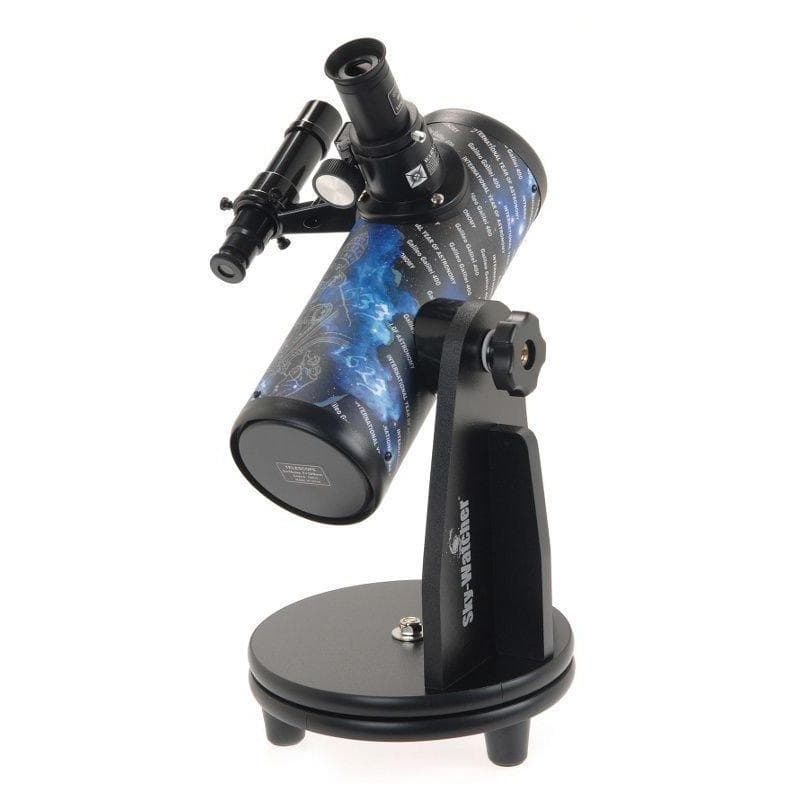
The smallest real telescope
The Moon very well, Saturn and Jupiter small but sharp. For a child or a rucksack.
€94seen 7 Oct 2026 at Astroshop
See it at Astroshoppaid link?
The step that changes everything
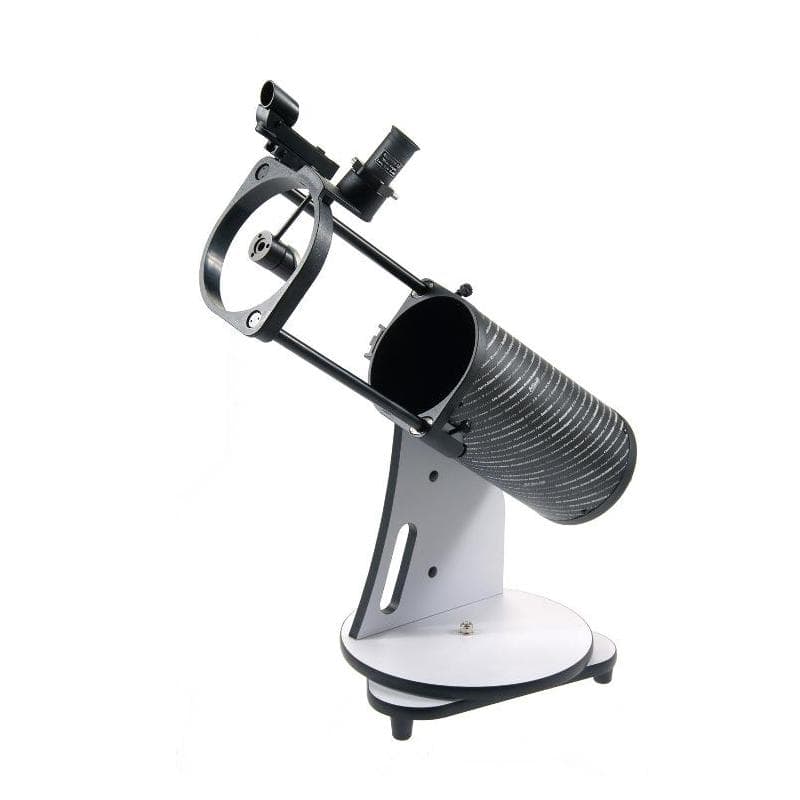
Sky-Watcher Heritage 130P FlexTube
Resolved clusters, Jupiter's belts, Saturn's ring standing clear. If today's price is over your ceiling, wait for a sale or buy used.
€197seen 7 Oct 2026 at Astroshop
See it at Astroshoppaid link?
This page gives them in order, shows what they let you see, and says when it is better to wait a month and go up a rung.
The models, at their observed price
The binoculars, the 76 and the two 130 mm tabletops the forums name: what this page recommends, in price order.
Saturn, suburban sky (Bortle 6). Computed, not photographed.
One price per model — the cheapest observed offer, with its date — and the button goes to that offer, never to the one that pays. Cards in price order. Links marked paid link earn us a commission and cost you nothing extra. Every seller is listed on the model's page.
The family's strengths
The family's limits
€62seen 7 Oct 2026 at Astroshop
 See it at Astroshoppaid link
The family's strengths
The family's limits
€94seen 7 Oct 2026 at Astroshop
 See it at Astroshoppaid link
The family's strengths
The family's limits
€197seen 7 Oct 2026 at Astroshop
 See it at Astroshoppaid link
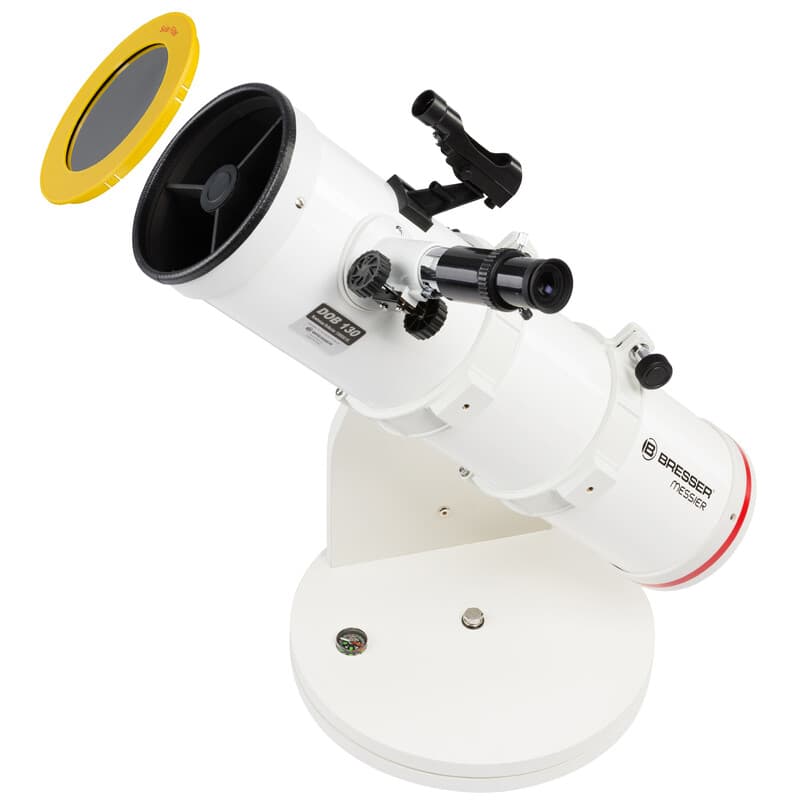
€219seen 7 Oct 2026 at Astroshop
 See it at Astroshoppaid link
Move the slider: the card changes with it.
The next rung
Sky-Watcher Skyliner 150P Classic
Beyond this page's subject, but it is what the difference buys: the 150/1200 Dobsonian, the most light per euro.
€357seen 7 Oct 2026 at Astroshop
See it at Astroshoppaid link?
The real telescope
Sky-Watcher Heritage 130P FlexTube
The 130 mm tabletop Newtonian: resolved clusters, Jupiter's belts, Saturn's ring standing clear.
€197seen 7 Oct 2026 at Astroshop
See it at Astroshoppaid link?
Binoculars, not a telescope
10×50s show more objects, more easily, on the first night, and they work in daylight too.
€50seen 7 Oct 2026 at Astroshop
See it at Astroshoppaid link?
Nothing yet
A sky-map app and your eyes. Learning to find Jupiter and Lyra without an instrument is exactly what you will need to do with one.
No model to buy
What is up tonight →€157 more buys the next step: 150–200 mm Dobsonian.
The two circles below are computed, not drawn by hand: same target, same suburban sky, same eyepiece. On the left the 70 mm refractor on a light tripod; on the right the 130 mm tabletop Newtonian. Between them, one rung of budget; the difference in the image is everything this page is trying to say.
Entry-level 10×50 binoculars gather more light than a 60 mm refractor, show a 6–7° field — the whole Moon with room around it, the complete Pleiades, Andromeda as an elongated patch — and go everywhere. No tripod to adjust, no finder to align, no mirror to collimate. On the first night they show something; the refractor at the same price often does not.
What they do not do: magnify. Saturn stays a slightly oval point, Jupiter a point with four grains of light in a line. If it is the planets you want, you need a telescope — and under €200 that will be the tabletop Newtonian, not the refractor.
ExperienceOpinion, not physics — shared by nearly everyone who has helped a beginner.
A kit whose eyepieces and Barlow reach more than twice the usual rule
The usual rule is twice the aperture in millimetres. A 70/700 refractor sold with a 4 mm eyepiece and a 3× Barlow reaches 700 ÷ 4 × 3 = 525× on 70 mm, an exit pupil of 0.13 mm: 3.75 times the rule's 140×. The optics may be decent; it is that magnification that is of no use.
A reflector whose listed focal length is well beyond its tube length
A Newtonian is about as long as its focal length. A 600 mm tube sold as 1000 mm of focal length has a lens in the focuser that stretches it: the Bird-Jones design.
An instrument whose listing gives neither the aperture nor the focal length
Without those two numbers nothing can be worked out: not the useful magnification, not the exit pupil, not the light gathered.
If you have €150 and want a telescope — not binoculars — the right answer is to wait until you have the price of the 130 tabletop shown above. That is the rung where you go from 60–70 mm to 130 mm: (130 ÷ 70)², about 3.4 times the light, and doubles split down to 0.9″ instead of 1.7″ (116 ÷ aperture, arithmetic). It is the most rewarding step in the whole market, and worth a month of patience. Meanwhile: a sky-map app and your eyes. Learning to find Jupiter and Lyra without an instrument is exactly what you will need to do with one.
And second-hand: a used 130 mm tabletop Newtonian goes for about half its new price on astronomy-forum classifieds, often with an extra eyepiece. Check the mirror is clean and the base turns without play; that is all.
Cheapest first. Each view is the Hercules Cluster through the model, at the same exit pupil, under the same suburban sky.
| Model | Aperture | Weight | Setup | What it shows | Price |
|---|---|---|---|---|---|
| Bresser Hunter 10×50For whom: Anyone, as a first instrument | 10×50 | 0.8 kg | 1 min | €507 Oct 2026 · Astroshop | |
| Celestron UpClose G2 10×50For whom: Anyone, as a first instrument | 10×50 | 0.9 kg | 1 min | €627 Oct 2026 · Astroshop | |
| Sky-Watcher Heritage 76For whom: A child, a rucksack | 76 mm · f/3.9 | 1.8 kg | 2 min | €947 Oct 2026 · Astroshop | |
| Sky-Watcher Heritage 130P FlexTubeFor whom: The first real telescope | 130 mm · f/5.0 | 6.2 kg | 3 min | €1977 Oct 2026 · Astroshop | |
| Bresser Messier 130/650 DobsonFor whom: The first real telescope | 130 mm · f/5.0 | 7.5 kg | 3 min | €2197 Oct 2026 · Astroshop | |
| Sky-Watcher Skyliner 150P ClassicFor whom: Above €300, if there is room | 150 mm · f/8.0 | 18.0 kg | 8 min | €3577 Oct 2026 · Astroshop |
If your ceiling is strictly €200, wait for a sale or a used one rather than buying a 70 mm refractor.
10×50 binoculars do not: Saturn stays an oval point.
They show more, more easily, on the first night, and they work in daylight too.
Look at the kit: with a 4 mm eyepiece and a 3× Barlow it reaches 525× on 60 mm (an exit pupil of 0.11 mm), more than four times that. The aperture and the mount matter more than the number printed.
The eyepieces supplied with a 130 mm tabletop Newtonian are enough to start; the first useful purchase after that is a decent 8–10 mm eyepiece at €40–60.
These thumbnails are built from real photographs, scaled and darkened by the same arithmetic as the large view.
What this page rests on and when it changed, computed from the catalogue — no date below is typed by hand. There is no price history yet, so this log says what was read and when, never whether it went up or down.
One price per model: the cheapest observed offer, with its date. Models are ordered by that price, never by what a link pays. How we choose.
Read next
Written and maintained by the person behind About.