Two models, the numbers decide
Vaonis Vespera II or Unistellar Odyssey?
Vaonis Vespera II — 50 mm, €1577. Unistellar Odyssey — 85 mm, €1919. The same method as everywhere on this site: the numbers first, the verdict from them.
Smart telescope (30–80 mm, integrated camera)
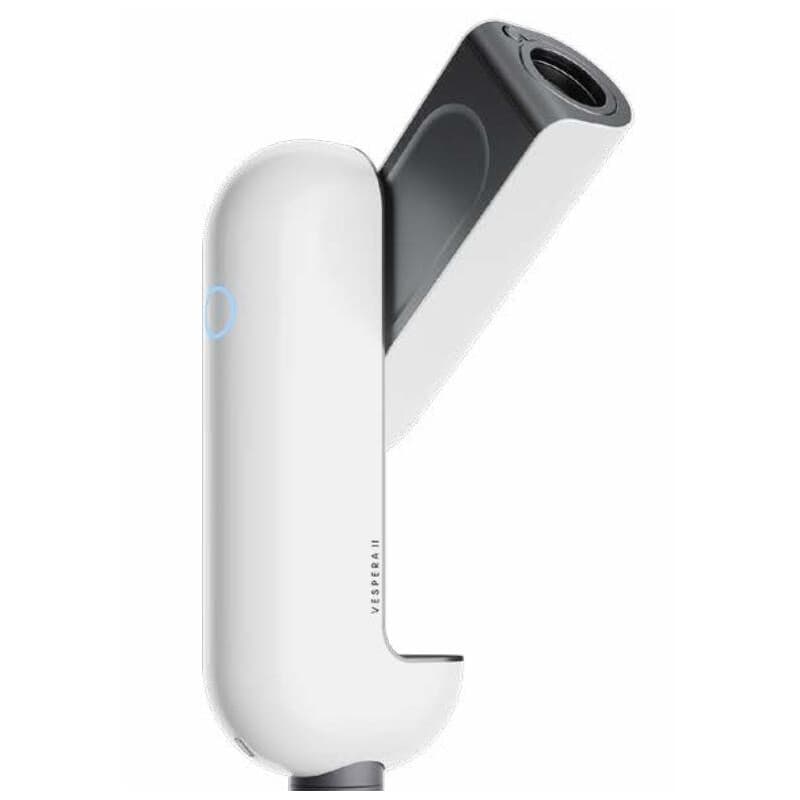
€1,577seen 19 Nov 2026 at Astroshop
Large smart telescope (85–152 mm)

€1,919seen 19 Nov 2026 at Astroshop
Side by side
The Unistellar Odyssey collects 2.9× more light — that is what aperture buys.
| Vaonis Vespera II | Unistellar Odyssey | |
|---|---|---|
| Aperture | 50 mm | 85 mm |
| Focal ratio | 250 mm · f/5.0 | 320 mm · f/3.8 |
| Typical weight | 5 kg | 6.5 kg |
| Setup time | 4 minutes | 8 minutes |
| Learning curve | 1 out of 5 | 1 out of 5 |
| Useful magnification | ≤ 100× | ≤ 170× |
| Resolution (Dawes) | 2.3″ | 1.4″ |
| Observed price | €1,577seen 19 Nov 2026 at Astroshop | €1,919seen 19 Nov 2026 at Astroshop |
| Where to buy | See it at Astroshop paid link | See it at Astroshop paid link |
Choose the Vaonis Vespera II if…
- budget decides: €342 less
- it has to be carried: 2 kg lighter
Where to buy
Also search at First Light Optics · Optique Unterlinden · Pierro Astro · Teleskop-Express (searches; neither price nor stock checked)
1 of these 5 links earn us a commission, marked above. Sorted by price, never by what pays. How this site is funded.
Price alert
Our price readings have been paused since 24 Oct 2026. Alerts will resume as soon as readings do.
One email when the price we observe for the Vaonis Vespera II falls at least 5% below the lowest we observed in the previous 30 days. At most one a week.
Choose the Unistellar Odyssey if…
- you want the most sky: 2.9× the light
Where to buy
Also search at First Light Optics · Optique Unterlinden · Pierro Astro · Teleskop-Express (searches; neither price nor stock checked)
1 of these 5 links earn us a commission, marked above. Sorted by price, never by what pays. How this site is funded.
Price alert
Our price readings have been paused since 24 Oct 2026. Alerts will resume as soon as readings do.
One email when the price we observe for the Unistellar Odyssey falls at least 5% below the lowest we observed in the previous 30 days. At most one a week.
Goal by goal
The family scores the advisor uses, out of 5 — a property of each family, not marketing.
- First astrophotography
Vespera II — The shortest path from nothing to a recognisable image of a nebula.
Odyssey — As with the small ones, a recognisable nebula appears in a few minutes, with more light in each exposure. The instrument still makes the image.
- Sharing it with children
Vespera II — A picture on a phone holds attention that a grey smudge in an eyepiece does not.
Odyssey — A picture on a screen holds a child's attention, as it does with a small smart telescope, and it is the same kind of picture. An adult has to carry it: 6.5 to 18.9 kg.
- Taking it with me
Vespera II — Small, self-contained, battery powered.
Odyssey — Battery powered and self-contained, but 6.5 to 9 kg in all, and 18.9 kg in three pieces for the heaviest. A car trip, not hand luggage.
- The Sun
Vespera II — In white light: the larger sunspots and their groups. Dawes' limit on the Sun: 2.3″ (116 ÷ 50 mm, arithmetic). It needs its maker's own solar filter (Vaonis Vespera): €149, seen 26 Sept 2026. A generic cell does not fit this body. Every time: certified filter over the front · finder capped · never an eyepiece filter · an adult with children · never without the filter.
Odyssey — Until it has a filter made for it, it shows nothing of the Sun safely. No ready-made filter in our list fits this one. Ask its maker or a dealer for a certified front filter made for it. Never make one. Every time: certified filter over the front · finder capped · never an eyepiece filter · an adult with children · never without the filter.
- Nebulae, clusters and galaxies, by eye
Vespera II — It shows you deep sky, but not by eye. Score depends entirely on whether that distinction matters to you.
Odyssey — It shows the deep sky, but on a screen, and that includes the electronic eyepiece. If seeing with your own eyes matters to you, the same money buys a 250–300 mm Dobsonian.
- The Moon and the planets
Vespera II — Small aperture and short focal length. The Moon comes out fine; the planets are underwhelming.
Odyssey — More aperture, but 320 to 450 mm of focal length against 150 to 260 mm on the small ones, and a planet's image on the sensor grows with focal length, not aperture: Saturn stays small. The Moon comes out fine.
The same sky, through both
Both are smart telescopes: no eyepiece to simulate. They stack photographs; the comparison is the spec sheet, the weight and what each app delivers.
Other duels with these models
Guides that discuss these models
Read next
- Which telescope should a beginner buy?The short answer, the three things the box does not say, then the detail by budget and by situation.Updated 5 Nov 2026
- Giving a telescope for Christmas 2026Which one to give to whom, at what price, and when the best present is not a telescope.Updated 19 Nov 2026
- A 250 or a 300 mm Dobsonian?44% more light, up to 7 kg more tube. Under which sky the 300 is worth carrying.Updated 20 Nov 2026