Under 7
No telescope: light binoculars
8×30s held in two hands, a quarter Moon, a night under the Milky Way. Appetite first, instrument second.
No model to buy
What binoculars show →The right question is not the child's age. It is: who will set the instrument up, who will point it, and what will they see on the first night?
The class first, then the cheapest observed model in it. Every view is computed: same eyepiece rule, same suburban sky.
Under 7
8×30s held in two hands, a quarter Moon, a night under the Milky Way. Appetite first, instrument second.
No model to buy
What binoculars show →The cheapest that sufficesThe lowest observed price among these picks that will show the craters of the Moon and the ring of Saturn, and still be in use at fifteen.
7–10: the best present
Sky-Watcher Heritage 130P FlexTube
You set it up and point it, they look; by nine they point it at the Moon themselves.
€197seen 7 Oct 2026 at Astroshop
See it at Astroshoppaid link?
Teenager
Sky-Watcher Skyliner 150P Classic
Heavy, but not too heavy for a teenager, and the instrument that shows the most per euro. Alt-az, no GoTo.
€357seen 7 Oct 2026 at Astroshop
See it at Astroshoppaid link?
Depending on the answer, the right present is a small tabletop telescope you will use with them, binoculars they can carry alone — or, for a few more years, just a planisphere and a trip under a real sky. What it never is, is the 'children's telescope' in the Christmas catalogue.
This is the point that decides everything. A child does not compare the image with what an adult knows about Saturn; they compare it with the picture on the box. If the box shows a nebula in colour and the eyepiece shows a grey smudge, the telescope has lost, whatever it cost. Show them the Moon first — at a quarter, not full — because it is the one thing in the sky that looks like the photographs.
Second night, if Saturn or Jupiter is up: the ring clearly detached, the four moons in a line. Small, sharp, and real — a child understands very well the difference between a photograph and an object they are looking at. Keep the nebulae for later, and for a dark sky.
The ages below are the ones people type into a search box, not thresholds. What actually changes from one band to the next is who sets the instrument up and who points it. Read yours, then the next one: the right present is often next year's.
Move the slider: the card changes with it.
Age 4–5
They will not hold an eye on an eyepiece. A star map, a quarter Moon, and the Milky Way one night on holiday; light 8×30 binoculars if the interest is there.
No model to buy
The Moon, and what you see of it →Age 6
8×30s held in two hands show the Moon's seas and the Pleiades. The telescope comes at seven, set up by you.
No model to buy
What binoculars show →Age 7
The smallest real telescope: you set it up and point it, they look at the Moon and the ring of Saturn.
€94seen 7 Oct 2026 at Astroshop
See it at Astroshoppaid link?
Age 8–9: the best present
Sky-Watcher Heritage 130P FlexTube
Sits on a garden table with nothing to adjust; by nine they point it at the Moon themselves.
€197seen 7 Oct 2026 at Astroshop
See it at Astroshoppaid link?
Age 10–12: independence
Binoculars they take out alone. The tabletop 130 is still the right telescope if there is a motivated adult at home.
€50seen 7 Oct 2026 at Astroshop
See it at Astroshoppaid link?
13 and up
Sky-Watcher Skyliner 150P Classic
A beginner like any other: the 150/1200 Dobsonian, if there is room. Otherwise the tabletop 130.
€357seen 7 Oct 2026 at Astroshop
See it at Astroshoppaid link?
No telescope. A child this age will not point anything alone and will not hold an eye on an eyepiece for more than a few seconds; that is not a criticism, it is motor skills. Light 8×30 binoculars, held in two hands, show the Moon with its seas and the Pleiades. The real outing is a dark sky on holiday and the Milky Way with the naked eye.
If a telescope arrives anyway — a grandparent, a box — put it on a quarter Moon and nothing else. It is the one target that looks like the picture on the carton.
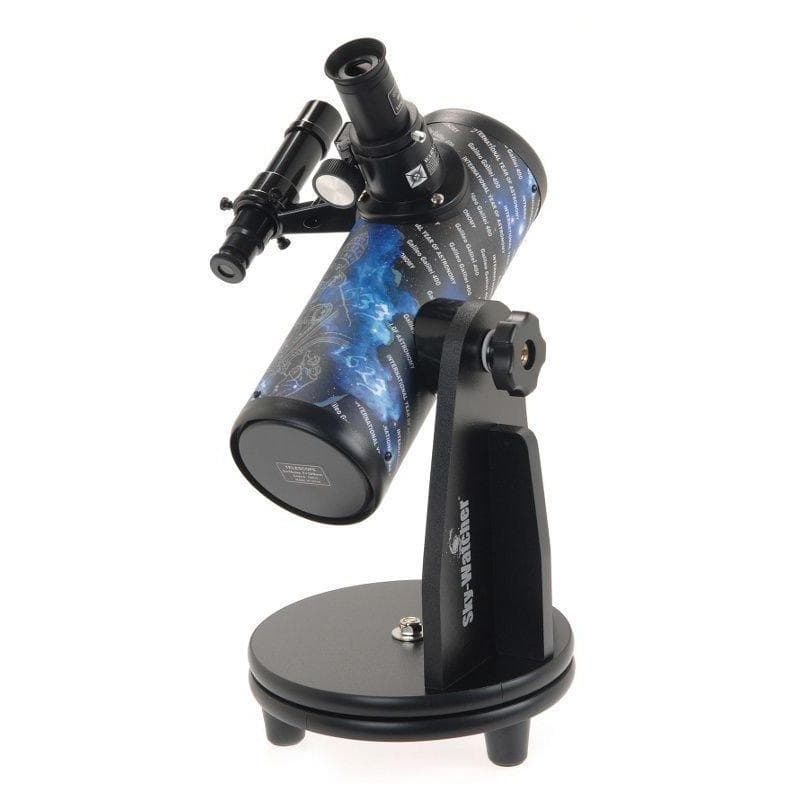
The hinge. At six, still binoculars. At seven a first telescope becomes possible on one condition: you set it up, you point it, you decide when to go in. The child looks. The 76 mm tabletop Newtonian (76/300) is the smallest real telescope; it shows the Moon and Saturn's ring honestly and fits in a bag.
The 76/300, at its observed price
Saturn, suburban sky (Bortle 6). Computed, not photographed.
One price per model — the cheapest observed offer, with its date — and the button goes to that offer, never to the one that pays. Cards in price order. Links marked paid link earn us a commission and cost you nothing extra. Every seller is listed on the model's page.
The family's strengths
The family's limits
€94seen 7 Oct 2026 at Astroshop
 See it at Astroshoppaid link
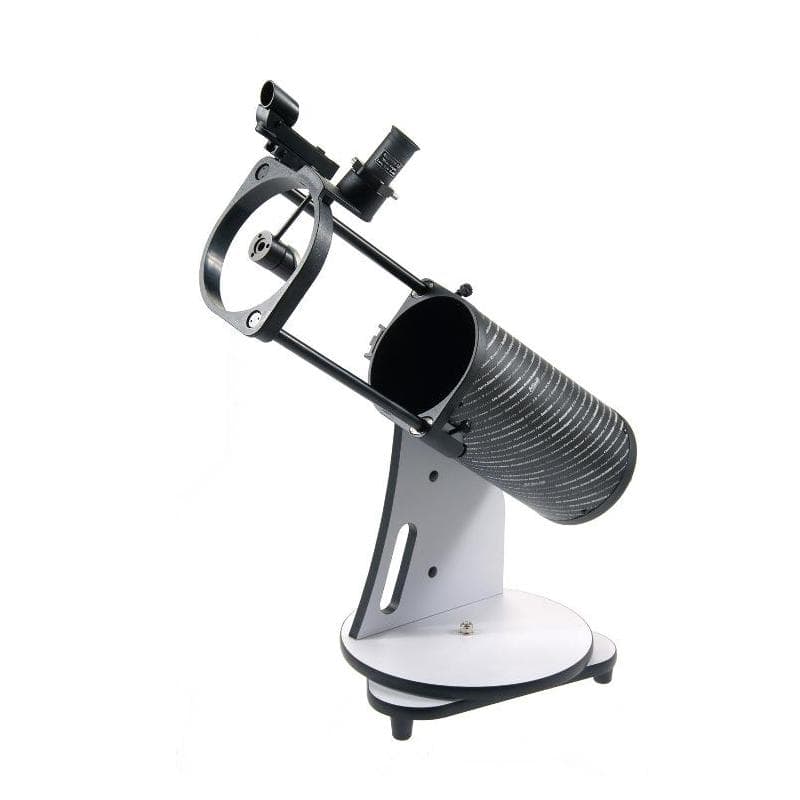
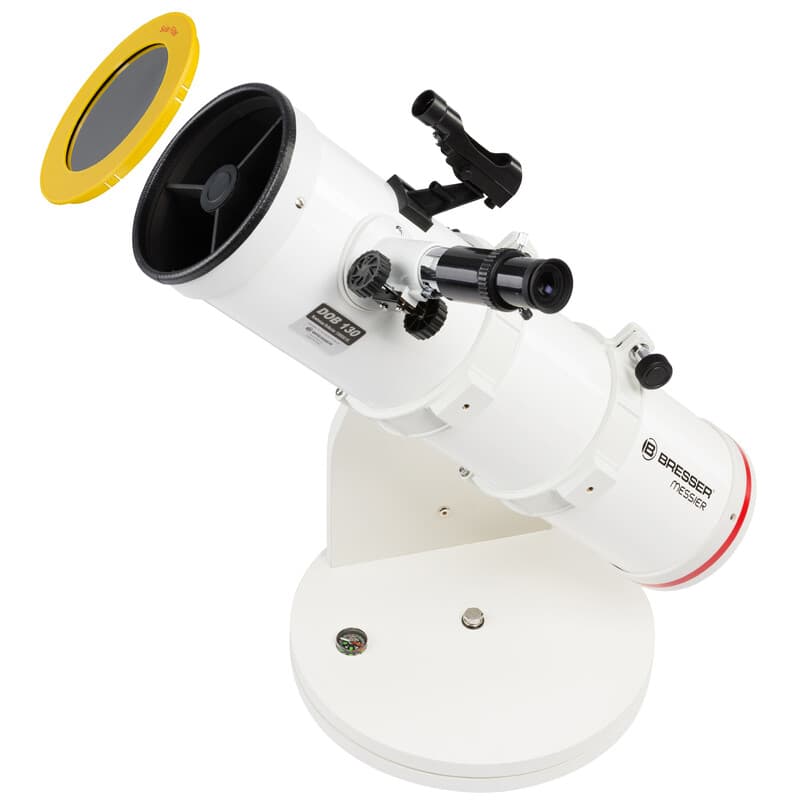
The age of the best present in this guide. A 130 mm tabletop Newtonian (130/650) sits on a garden table, is pointed by hand, needs no adjustment, fits in a cupboard. You will carry it out; they will look — and around nine they will start pointing it at the Moon themselves. It is the telescope they will still be using at fifteen.
The two 130 mm tabletops, at their observed price
Saturn, suburban sky (Bortle 6). Computed, not photographed.
The family's strengths
The family's limits
€197seen 7 Oct 2026 at Astroshop
 See it at Astroshoppaid link?
€219seen 7 Oct 2026 at Astroshop
 See it at Astroshoppaid link?
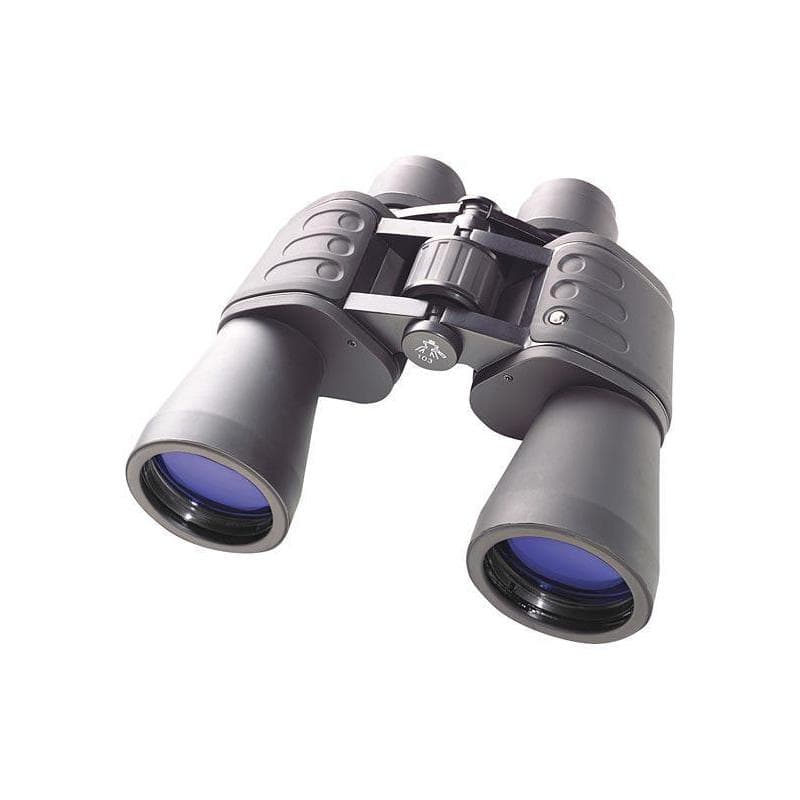
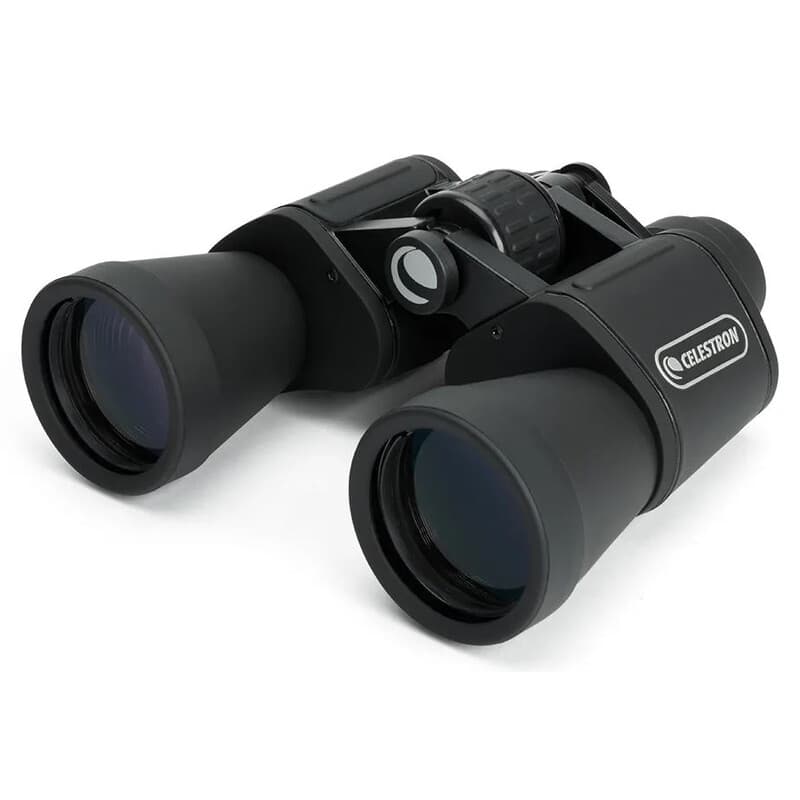
The question becomes independence. 10×50 binoculars with a second-hand photo tripod, a planisphere, and the child does their own evenings. The 130 mm tabletop remains the right telescope if there is a motivated adult at home; a telescope they cannot set up alone will stay in its box as soon as you no longer have the time. Both, if the budget allows — they do not do the same thing.
Two 10×50 pairs, at their observed price
Saturn, suburban sky (Bortle 6). Computed, not photographed.
The family's strengths
The family's limits
€50seen 7 Oct 2026 at Astroshop
 See it at Astroshoppaid link?
€62seen 7 Oct 2026 at Astroshop
 See it at Astroshoppaid link?
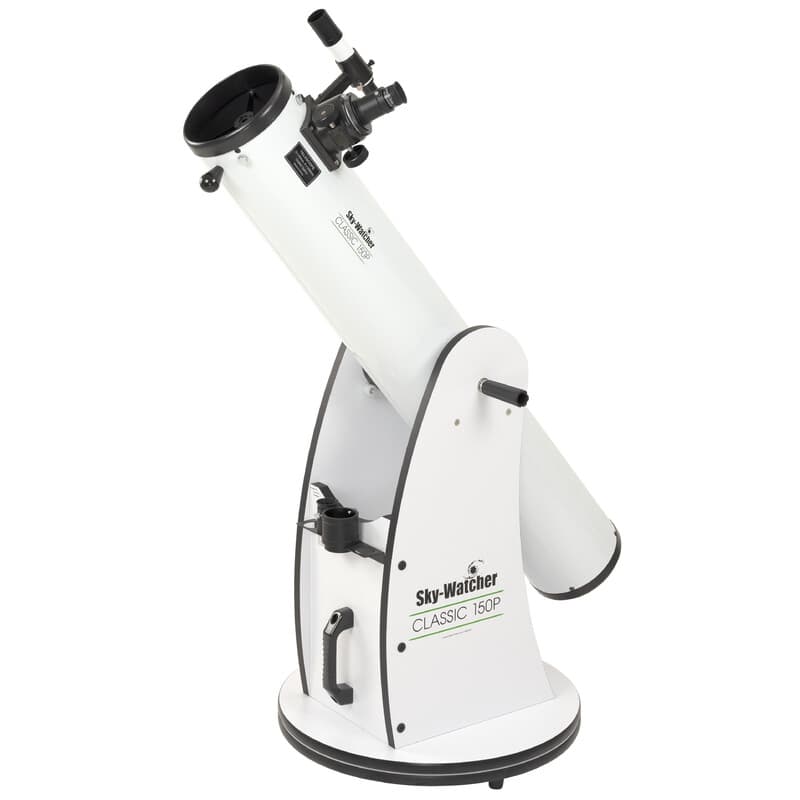
A beginner like any other, with shorter arms and less patience for a complicated mount. The 150/1200 Dobsonian is heavy for a teenager but not too heavy, and it is the instrument that shows the most per euro; the 130 mm tabletop remains the answer if space is short. No equatorial mount, no GoTo: the general guide applies from here.
The 150/1200 Dobsonian, at its observed price
Saturn, suburban sky (Bortle 6). Computed, not photographed.
A teenager, if there is room
150 mm · f/8.0 · 18.0 kg · set up in 8 min
The family's strengths
The family's limits
€357seen 7 Oct 2026 at Astroshop
 See it at Astroshoppaid link?
ExperienceOpinion, not physics — shared by nearly everyone who has helped a beginner.
The colourful €50–90 'children's telescope'
Check the aperture, the focal length and the eyepieces: a magnification on the box beyond twice the usual rule (twice the aperture in millimetres) will not be seen, and a small aperture gathers little light.
The 60–70 mm refractor at €99–129 advertised as '525×'
The usual rule gives it 120 to 140× (an exit pupil of 0.5 mm); a kit that reaches 525× is more than three times that. If you are given one, it shows the Moon well.
A telescope on an equatorial mount (EQ1, EQ2)
They will not understand it, neither will you on the first night, and it shakes.
A 'smart' telescope before twelve
A phone-driven camera with no eyepiece: they will see a screen, not the sky. Later, perhaps; not as a first instrument.
Buy no accessory before the fifth outing. No Barlow, no filter, no extra eyepiece. By the fifth, you will both know what is missing, and it will probably be a chair.
Cheapest first. Each view is the Hercules Cluster through the model, at the same exit pupil, under the same suburban sky.
| Model | Aperture | Weight | Setup | What it shows | Price |
|---|---|---|---|---|---|
| Bresser Hunter 10×50For whom: Age 10 and up, alone | 10×50 | 0.8 kg | 1 min | €507 Oct 2026 · Astroshop | |
| Celestron UpClose G2 10×50For whom: Age 10 and up, alone | 10×50 | 0.9 kg | 1 min | €627 Oct 2026 · Astroshop | |
| Sky-Watcher Heritage 76For whom: Age 6–7, set up by an adult | 76 mm · f/3.9 | 1.8 kg | 2 min | €947 Oct 2026 · Astroshop | |
| Sky-Watcher Heritage 130P FlexTubeFor whom: Age 8–12, with an adult | 130 mm · f/5.0 | 6.2 kg | 3 min | €1977 Oct 2026 · Astroshop | |
| Bresser Messier 130/650 DobsonFor whom: Age 8–12, with an adult | 130 mm · f/5.0 | 7.5 kg | 3 min | €2197 Oct 2026 · Astroshop | |
| Sky-Watcher Skyliner 150P ClassicFor whom: A teenager, if there is room | 150 mm · f/8.0 | 18.0 kg | 8 min | €3577 Oct 2026 · Astroshop |
Before that, light binoculars are better. Alone, without an adult, not before ten or twelve — and then 10×50 binoculars first.
Light 8×30 binoculars and a quarter Moon. At this age a child cannot hold an eye on an eyepiece; the telescope comes around seven, set up by you.
The Moon and Saturn's ring, honestly.
It shows the Moon in detail, Saturn's ring, Jupiter's moons, and will still be in use at fifteen.
This is the age they start pointing it at the Moon alone; an adult is still useful for the planets.
No equatorial mount, no €79 'children's telescope'.
Alt-azimuth, no GoTo: it is the instrument that shows the most per euro, and it sets up in two minutes.
At that price the optics and the tripod are poor; the child sees a blurry Moon and gives up. The same €80 in 8×40 or 10×50 binoculars shows much more, without the frustration.
These thumbnails are built from real photographs, scaled and darkened by the same arithmetic as the large view.
What this page rests on and when it changed, computed from the catalogue — no date below is typed by hand. There is no price history yet, so this log says what was read and when, never whether it went up or down.
One price per model: the cheapest observed offer, with its date. Models are ordered by that price, never by what a link pays. How we choose.
Read next
Written and maintained by the person behind About.