Two models, the numbers decide
Sky-Watcher Skymax 127 AZ-GTi or Sky-Watcher Skyliner 150P Classic?
Sky-Watcher Skymax 127 AZ-GTi — 127 mm, €709. Sky-Watcher Skyliner 150P Classic — 150 mm, €357. The same method as everywhere on this site: the numbers first, the verdict from them.
102–127 mm Maksutov on a GoTo alt-az
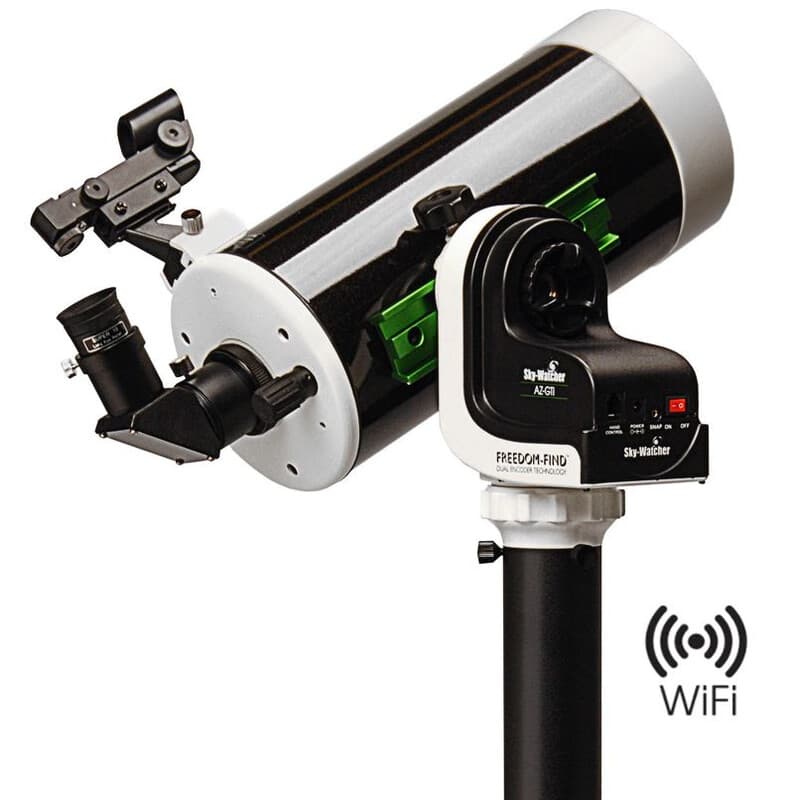
€709seen 8 Oct 2026 at Astroshop
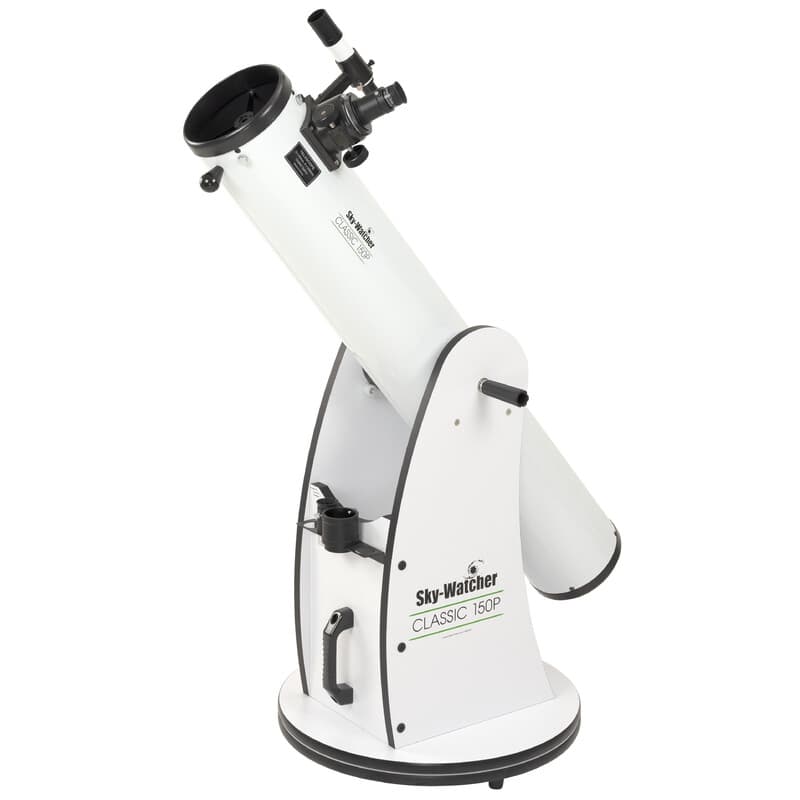
€357seen 8 Oct 2026 at Astroshop
Side by side
The Sky-Watcher Skyliner 150P Classic collects 1.4× more light — that is what aperture buys.
| Sky-Watcher Skymax 127 AZ-GTi | Sky-Watcher Skyliner 150P Classic | |
|---|---|---|
| Aperture | 127 mm | 150 mm |
| Focal ratio | 1500 mm · f/11.8 | 1200 mm · f/8.0 |
| Typical weight | 8.5 kg | 18 kg |
| Setup time | 12 minutes | 8 minutes |
| Learning curve | 3 out of 5 | 2 out of 5 |
| Useful magnification | ≤ 254× | ≤ 300× |
| Resolution (Dawes) | 0.9″ | 0.8″ |
| Observed price | €709seen 8 Oct 2026 at Astroshop | €357seen 8 Oct 2026 at Astroshop |
| Where to buy | See it at Astroshop paid link | See it at Astroshop paid link |
Choose the Sky-Watcher Skymax 127 AZ-GTi if…
- it has to be carried: 10 kg lighter
Full page on the Skymax 127 AZ-GTi →
Where to buy
Also search at First Light Optics · Optique Unterlinden · Pierro Astro · Teleskop-Express (searches; neither price nor stock checked)
1 of these 5 links earn us a commission, marked above. Sorted by price, never by what pays. How this site is funded.
Choose the Sky-Watcher Skyliner 150P Classic if…
- budget decides: €352 less
- you want the most sky: 1.4× the light
- the first nights should stay simple: gentler learning curve
Full page on the Skyliner 150P Classic →
Where to buy
Also search at First Light Optics · Optique Unterlinden · Pierro Astro · Teleskop-Express (searches; neither price nor stock checked)
1 of these 5 links earn us a commission, marked above. Sorted by price, never by what pays. How this site is funded.
Goal by goal
The family scores the advisor uses, out of 5 — a property of each family, not marketing.
- The Moon and the planets
Skymax 127 AZ-GTi — This is what the design is for. Sharp, high-contrast, and long enough to reach 250× on 127 mm (an exit pupil of 0.5 mm) without effort.
Skyliner 150P Classic — Plenty of resolution. You will be nudging it along by hand every thirty seconds at high power.
- The Sun
Skymax 127 AZ-GTi — In white light: sunspots with their penumbra, faculae near the edge, and granulation on a steady morning. Dawes' limit on the Sun: 0.9″ (116 ÷ 127 mm, arithmetic). It needs a certified cell over the front whose range holds its 146.05 mm outside diameter: the Omegon Helievo 132 (124–148 mm), €79 (seen 26 Sept 2026). Every time: certified filter over the front · finder capped · never an eyepiece filter · an adult with children · never without the filter · measure first.
Skyliner 150P Classic — In white light: sunspots with their penumbra, faculae near the edge, and granulation on a steady morning. Dawes' limit on the Sun: 0.8″ (116 ÷ 150 mm, arithmetic). Measure the outside diameter first, then one of: Omegon Helievo 152 (144–168 mm), Omegon Helievo 172 (164–188 mm), Omegon Helievo 192 (184–208 mm), euro EMC SF100 (187–221 mm) (€89–€125). Every time: certified filter over the front · finder capped · never an eyepiece filter · an adult with children · never without the filter · measure first.
- Taking it with me
Skymax 127 AZ-GTi — The tube travels beautifully; the mount and tripod less so.
Skyliner 150P Classic — It goes in a car and nowhere else.
- Nebulae, clusters and galaxies, by eye
Skymax 127 AZ-GTi — Modest aperture and a narrow field. Globulars are fine; large nebulae are not.
Skyliner 150P Classic — The classic answer. Aperture is what deep-sky observing is short of, and this is where it stops being expensive.
- Learn my way around the sky
Skymax 127 AZ-GTi — GoTo does the part you said you wanted to learn.
Skyliner 150P Classic — Star-hopping with a finder works well, but the field is narrower than binoculars.
The same sky, through both
These circles are simulations, computed from the aperture, the magnification and the sky — indicative, not exact. A real night also depends on the turbulence, your eyes and your experience. Closer to the truth than the photo on the box; still not a promise.
The Moon
Saturn
The Orion Nebula
The Andromeda Galaxy
Photo credits
These thumbnails are built from real photographs, scaled and darkened by the same arithmetic as the large view.
Read next
- Do you need a GoTo mount for a first telescope?At €500 the motor replaces half the mirror. Who that is a bad trade for, and the three people it is right for.Updated 30 Aug 2026
- Refractor or reflector for a first telescope?For the same money a reflector gives two to three times the aperture. When that decides, and the two cases where it does not.Updated 30 Aug 2026
- 130/900, 150/750 or a 150/1200 Dobsonian?The three forum favourites show almost the same thing. What separates them is what holds them up.Updated 23 Aug 2026